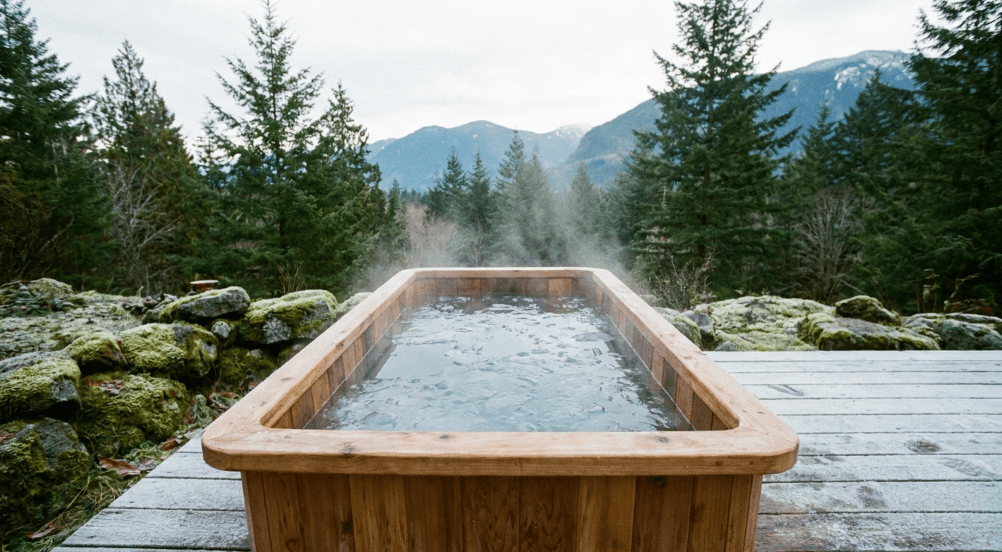
A cold plunge installation comes down to three technical requirements: a properly sized electrical circuit for the chiller (120-volt for most compact units, 240-volt for larger ones), a stable, adequately rated foundation pad that can support the tub’s full weight once filled, and clearance of at least 12 inches from structures for airflow and access, more on the entry side. Getting any one of these wrong is the most common reason a cold plunge installation needs rework within the first year. Here is what each requirement actually involves.
What Electrical Circuit Does the Chiller Actually Need?
Chiller amperage varies by tub size and target temperature, and this is the first spec to confirm before anything else is planned. Compact chillers built for tubs under roughly 150 gallons commonly run on a standard 120-volt, 20-amp GFCI-protected circuit, which many outdoor patios already have. Chillers sized for 300 gallons or more, or units built to hold the lower end of the typical 39 to 55 degree Fahrenheit range even in warm weather, more often require a dedicated 240-volt circuit. GFCI protection is not optional near standing water regardless of voltage; both the National Fire Protection Association and Underwriters Laboratories publish guidance treating any electrical equipment near a water feature as needing ground-fault protection, and most local electrical codes mirror that requirement directly.
What Foundation Does the Tub Actually Sit On?
Weight is the deciding factor here, and it adds up fast. A tub holding 100 gallons of water weighs over 800 pounds from the water alone, before adding the tub’s own weight, the chiller, and an occupant. A 300-gallon tub can exceed 2,500 pounds filled. A poured concrete pad, typically 4 inches thick and reinforced depending on local frost line and soil conditions, handles this reliably for most installations. Compacted paver or gravel bases can work for lighter, smaller tubs on stable soil, but skipping a proper foundation on unstable or sloped ground risks uneven settling that stresses the tub shell and any rigid plumbing connections over time. Always check the manufacturer’s stated weight and foundation guidance rather than assuming any flat surface will do.
How Much Clearance Does the Installation Need?
Clearance serves two purposes: airflow around the chiller, which needs to exhaust heat to run efficiently, and physical access for maintenance and safe entry. Most manufacturers specify at least 12 inches of open space on the sides where the chiller vents, and significantly more, generally 24 inches or more, on whichever side is used to step in and out. Local building code may layer additional setback requirements on top of the manufacturer spec, particularly distance from a property line or septic field, so checking both sources before finalizing placement avoids having to relocate the tub after installation.
Where Does a Professional Installer Come In?
For a straightforward setup on an existing 120-volt outlet and a stable pad, most of this is manageable without outside help beyond confirming the outlet is properly GFCI-protected. Once a dedicated circuit, a new pad, or permanent drain plumbing enters the picture, bringing in an electrician and, in some cases, a general contractor becomes the more reliable route. Comparing full installed packages across a few manufacturers, including what SweatDecks lists for its cold plunge lineup, is a useful way to see what a properly wired, foundationed setup actually costs before assuming a bare unit price reflects the full project.
Why Does Getting This Right Matter for Long-Term Use?
A correctly installed tub is what makes consistent use possible in the first place, and consistency is where any benefit comes from. Research on cold water immersion, including a 2025 systematic review and meta-analysis in PLoS One and a 2023 meta-analysis in Frontiers in Physiology, both found modest associations between cold-water immersion and improved recovery or wellbeing markers, but those studies reflect regular, repeated use, not occasional dips. A 2012 Cochrane review similarly found reduced muscle soreness with cold-water immersion compared with rest, rating the evidence as low to moderate certainty. A tub that trips a breaker, sits on an unstable pad, or gets abandoned because access is awkward will not deliver whatever benefit the research points to, no matter how good the unit itself is.
What Inspection Steps Should Follow Installation?
Once the tub is placed, wired, and filled for the first time, a short checklist catches most problems before they become expensive. Run the chiller for a full cycle and confirm it reaches and holds its rated low temperature rather than plateauing several degrees short, which can indicate an undersized unit or a refrigerant issue from the factory. Check the GFCI outlet or breaker by testing its trip function, since a GFCI that fails to trip on test is not actually protecting anyone despite being wired in. Inspect the pad after the first few days for any visible settling or unevenness, particularly if the tub sits on a paver or gravel base rather than poured concrete, since minor settling shows up faster than most people expect. Finally, confirm the drain line or hose routes water away from the foundation and any structure, since standing water pooling back toward the house or pad undermines the very foundation work just completed.
What Do Local Codes Typically Require Beyond the Basics?
Local code requirements vary by jurisdiction, but a few themes show up repeatedly. Many areas require GFCI protection on any outlet or circuit within a set distance of standing water, which most cold plunge installations fall well within. Some jurisdictions apply pool-adjacent rules, including barrier or fencing requirements, to any water feature above a certain depth or volume, which can catch owners off guard if they assumed those rules only applied to pools. Setback distances from property lines and septic systems are common too, and they vary enough by municipality that a phone call to the local building department before finalizing tub placement is worth the ten minutes it takes, rather than relocating an installed tub after the fact.
Frequently Asked Questions
Do all cold plunge chillers need a 240-volt circuit? No. Many compact chillers for tubs under roughly 150 gallons run on a standard 120-volt, 20-amp GFCI outlet. Larger chillers more often need a dedicated 240-volt circuit.
How thick does a foundation pad need to be? A poured concrete pad is typically recommended at 4 inches thick minimum, reinforced depending on frost line and soil. Check the manufacturer’s weight rating first.
What clearance does a cold plunge need from the house or fence? At least 12 inches for airflow and access, with 24 inches or more on the entry side. Local code may add its own setback rules.
Is a permit required to install a cold plunge? A portable, hand-drained tub on an existing outlet typically does not need one. A new circuit, permanent plumbing, or a poured foundation more often does.
References
- Effects of cold-water immersion on health and wellbeing: A systematic review and meta-analysis, PLoS One, 2025
- Effects of cold water immersion after exercise on fatigue recovery and exercise performance: meta analysis, Frontiers in Physiology, 2023
- Cold-water immersion (cryotherapy) for preventing and treating muscle soreness after exercise, Cochrane Database of Systematic Reviews, 2012
- National Fire Protection Association, electrical safety guidance